



When was the last time you sent someone a handwritten ‘thank you’ note of
gratitude or appreciation? This morning, I read about a new study on the underestimated
benefits of handwritten cards that inspired me to dig out my old personalized stationery
and get back in the habit of sending pento-paper notes expressing gratitude. This study, “Undervaluing Gratitude: Expressers
Misunderstand the Consequences of Showing Appreciation,” was published in the journal Psychological Science.
The new research on the benefits of handwritten ‘thank you’ letters was led by Amit Kumar, assistant professor of marketing in the McCombs School of Business at the University of Texas in Austin. Kumar collaborated with Nicholas Epley, professor of behavioral science at the University of Chicago Booth School of Business.
In the pre-internet era, I regularly mailed notes of thanks to people on engraved stationery my grandparents had given me as a graduation present along with a copy of How to Win Friends and Influence People. My grandmother, “Gabby,” was born at the turn of the 20th century in New England. She was a very 'proper' student at Smith College in 1922, right around the time Emily Post published her best-selling book, Etiquette. Gabby prided herself on having impeccable manners and put a premium on handwritten thank-you notes. She sent thank-you notes for everything. As much as I thought her rigid adherence to “etiquette” was a bit stuffy and over the top, I must admit that receiving her notes of appreciation always gave me a warm-and-fuzzy feeling of well-being.
After graduating from Hampshire College in the late 1980s, I moved to Greenwich Village in Manhattan. At the time, I selfidentified as a renegade and "political activist" who lived a scrappy, hand-to-mouth existence. I didn't fit the Emily Post mold. But, because I had boxes of free Crane’s stationery with my name engraved on top, I used these cards liberally. And, much like my grandmother, found myself thanking people for random things in handwritten notes all the time.
At first, I was amazed by how strongly people responded to getting these personalized notes of appreciation. But, it quickly became clear that sending handwritten notes created the ultimate winwin: Writing thank-you notes made me feel good; and it made recipients feel good, too. Emily Post and my grandmother were on to something!
Before her death in 1998, Gabby reordered more thank you cards and gave me the original engraving plates from Crane & Company. Sadly, with the advent of the internet, email, and then text messaging; I slowly fell out of the habit of handwriting cards. Thankfully, I still have boxes of this unopened stationery in the bottom drawer of my desk that I'm going to start using again.
Most People Undervalue the Benefits of Handwritten 'Thank You' Notes
For their recent study, Kumar and Epley conducted three different experiments in which study participants wrote various letters expressing gratitude and then predicted how surprised, happy, or potentially awkward they thought the recipient would feel when he or she received a handwritten note of appreciation.
제일 최근에 감사의 표현으로 다른 사람들로부터 “감사합니다” 메모를 받은 적이 언제였는가?
오늘 아침, 필자는 자필로 쓴 카드의 저평가에 관한 새로운 연구에 대해 읽었고,
내 오래된 문구류를 꺼내어 펜과 종이로 감사를 표현하는 습관을 다시 갖도록 하게 해주었다.
이 연구 “감사의 저 평가: 표현자들은 감사함을 보여주는 것의 결과를 잘못 이해한다.”는 Psychological Science 저널에 게재되었다.
The new research on the benefits of handwritten ‘thank you’ letters was led by Amit Kumar, assistant professor of marketing in the McCombs School of Business at the University of Texas in Austin. Kumar collaborated with Nicholas Epley, professor of behavioral science at the University of Chicago Booth School of Business.
자필로 된 감사 편지의 효과에 관한 이 새로나온 연구는 오스틴에 있는 텍사스 대학교의 McCombs School of Business의 마케팅조교수 Amit Kumar가 지휘하였다.
Kumar는 시카고 대학 경영대학의 행동과학 교수 Nicholas Epley와 협업하였다.
In the pre-internet era, I regularly mailed notes of thanks to people on engraved stationery my grandparents had given me as a graduation present along with a copy of How to Win Friends and Influence People. My grandmother, “Gabby,” was born at the turn of the 20th century in New England. She was a very 'proper' student at Smith College in 1922, right around the time Emily Post published her best-selling book, Etiquette. Gabby prided herself on having impeccable manners and put a premium on handwritten thank-you notes. She sent thank-you notes for everything. As much as I thought her rigid adherence to “etiquette” was a bit stuffy and over the top, I must admit that receiving her notes of appreciation always gave me a warm-and-fuzzy feeling of well-being.
필자는 인터넷이 생기기 전에는 문구류를 사용하여 사람들에게 정기적으로 감사의 메모를 보내곤 했다.
내가 쓴 문구는 필자의 조부모께서 졸업 선물로 주신 것으로 어떻게 친구를 얻고 사람들에게 영향을 미치는 지에 대한 문구(文句)가 새겨져 있었다.
나의 할머니, 개비는 20세기가 시작되었을 때 뉴 잉글랜드 지역에서 태어났다.
에밀리포스트가 그녀의 베스트 셀러인 “에티켓”을 출판했을 때, 할머니는 스미스 대학의 매우 ‘바람직한’ 학생이었다.
개비 할머니는 자신이 흠 잡을 데 없는 매너를 가지고 있음을 자랑스러워 하였고,
자필로 쓴 감사 메모를 가치 있게 생각했다. 할머니는 모든 일에 대해 감사 메모를 남겼다.
나는 할머니의 “에티켓”에 대한 엄격한 고수가 좀 답답하고 지나치다는 생각을 했지만,
할머니의 감사 메모를 받으면 따뜻하고 말랑한 웰빙의 느낌을 받은 것은 인정할 수밖에 없다.
After graduating from Hampshire College in the late 1980s, I moved to Greenwich Village in Manhattan. At the time, I selfidentified as a renegade and "political activist" who lived a scrappy, hand-to-mouth existence. I didn't fit the Emily Post mold. But, because I had boxes of free Crane’s stationery with my name engraved on top, I used these cards liberally. And, much like my grandmother, found myself thanking people for random things in handwritten notes all the time.
1980년대 후반에 햄프셔 대학을 졸업 후, 나는 맨해튼의 그린위치 마을로 이사를 갔다.
그 시절에는 자신을 입에 겨우 풀칠하는 허접스러운 삶을 사는 변절자, “정치 운동가”로 생각했다.
나는 에밀리 포스트 같은 사람이 아니었다. 하지만 나에겐 내 이름이 새겨진 크레인 사의 문구류들이 공짜로 있어 이것들을 자유롭게 이용했다.
그리고 내 할머니가 그랬던 것처럼 다른 사람들에게 별별일들에 대해 자필로 감사 메모를 남겨 고마움을 표현하는 일을 항상 해왔다.
At first, I was amazed by how strongly people responded to getting these personalized notes of appreciation. But, it quickly became clear that sending handwritten notes created the ultimate winwin: Writing thank-you notes made me feel good; and it made recipients feel good, too. Emily Post and my grandmother were on to something!
처음에는 이런 개인적으로 보내는 감사의 메모에 사람들이 강하게 반응하는 것에 놀랐다.
하지만 이내 자필 메모를 보내는 것이 궁극적으로는 윈-윈(win-win)이라는 것이 명확해졌다.
고맙다고 쓰는 일은 내 기분을 좋게 만들었다. 그리고 그수취인의 기분도 좋게 만들었다.
에밀리 포스트와 내 할머니는 정말로 좋은 일을 하고 있던 것이다!
Before her death in 1998, Gabby reordered more thank you cards and gave me the original engraving plates from Crane & Company. Sadly, with the advent of the internet, email, and then text messaging; I slowly fell out of the habit of handwriting cards. Thankfully, I still have boxes of this unopened stationery in the bottom drawer of my desk that I'm going to start using again.
개비 할머니는 1998년에 돌아가시기 전에도 크레인 사에서 감사 카드를 주문했고 나에게는 명패를 보내주기도 했다.
슬프게도 인터넷, 이메일, 문자 메시지의 출현 이후 나는 카드를 보내는 습관이 점점 없어지기 시작했다.
다행인 것은 책상서랍 바닥에 개봉하지 않은 문구가 남아 있어서 이것을 다시 사용해볼 생각이다.
Most People Undervalue the Benefits of Handwritten 'Thank You' Notes
많은 사람들은 감사 메모의 효과를 저평가한다.
For their recent study, Kumar and Epley conducted three different experiments in which study participants wrote various letters expressing gratitude and then predicted how surprised, happy, or potentially awkward they thought the recipient would feel when he or she received a handwritten note of appreciation.
Kumar와 Epley의 최근의 연구에서는 피험자가 자필로 감사를 표현하는 편지를 쓰고, 그것을 받을 수취인이 얼마나 놀라는지,
행복해 할지, 혹은 어색해 할지 예측을 해보는 세 가지 각기 다른 실험을 하였다.
Their results showed that people expressing gratitude underestimated how pleasantly surprised recipients would be to receive a handwritten ‘thank you’ and how positive the expression of gratitude made recipients feel. On the flip side, people who wrote thank-you letters overestimated the potential awkwardness that someone receiving a heartfelt thank you note would experience.
연구의 결과는 감사를 표하는 사람들이 그것을 받는 사람이 얼마나 즐거움으로 놀라워하는지,
그런 감사의 표현이 받는 사람이 얼마나 긍정적인 감정을 느끼는 지를 저평가한다는 것을 보여줬다.
반면, 감사 편지를 보낸 사람들은 진심 어린 감사메모를 받는 사람이 얼마나 어색함을 느낄 지는 과대평가하였다.
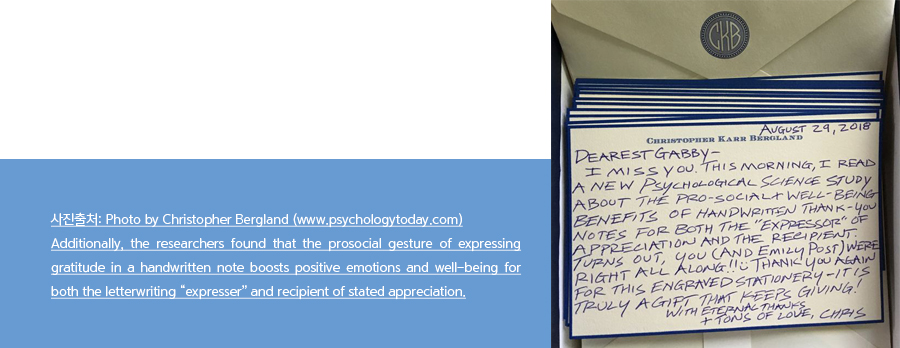
Additionally, the researchers found that the prosocial gesture of expressing gratitude in a handwritten note boosts positive emotions and well-being for both the letterwriting “expresser” and recipient of stated appreciation.
더불어, 연구자들은 자필 메모를 통한 친사회적인 감사의 표현이 편지를 쓴 “표현자”와 수취인 모두에게 긍정적 감정과 웰빙을 촉진시킴을 알아냈다.

Kumar and Epley speculate that egocentric bias often leads expressers of gratitude to systematically undervalue the positive impact that expressing appreciation and thankfulness has on recipients. As the authors write, “Wise decisions are guided by an accurate assessment of the expected value of action. Underestimating the value of prosocial actions, such as expressing gratitude, may keep people from engaging in behavior that would maximize their own-and others’-well-being.” They hope that putting the benefits of handwritten 'thank you' notes in the spotlight will inspire people from all walks of life to express gratitude more frequently in their day-to-day lives.
Kumar와 Epley는 자기중심적 편향이 감사를 표현한 사람에게 있어서 감사를 받은 사람에게 미치는 긍정적 영향을 과소평가하게 한다고 추측했 다.
그들의 말로는 이렇다. “행동의 기대값을 정확하게 평가하는 것이 지혜로운 선택을 인도한다.
친사회적 행동의 가치를 저평가하는 것은 사람들의 웰빙을 최대화할 수 있는 행위로부터 멀어지게 할 수 있다.”
그들은 자필로 쓴 감사의 메모가 주는 혜택에 대해 주목하는 함으로써 모든 계층의 사람들이 일상 생활에서 감사를 더 자주 표현하기를 바란다.
"We looked at what's correlating with people's likelihood of expressing gratitudewhat drives those choices-and what we found is that predictions or expectations of that awkwardness, that anticipation of how a recipient would feel-those are the things that matter when people are deciding whether to express gratitude or not," Kumar said in a statement. "What we saw is that it only takes a couple of minutes to compose letters like these, thoughtful ones and sincere ones. It comes at little cost, but the benefits are larger than people expect."
“우리는 무엇이 사람들이 감사를 표현하게 하는 것과 연관되어 있는지를 보았다.
우리가 찾아낸 사실은 어색함에 대한 예측, 수취인이 어떻게 느낄 지에 대한 예상이 감사를 표현할지 말지에 중요한 요소라는 것이었다.”
Kumar는 말한다. “우리는 이러한 사려 깊고 진실된 편지를 쓰는 데에는 몇 분이 걸리지 않는다는 것을 보았다.
들이는 비용은 적지만 따라 오는 혜택은 사람들이 예상하는 것보다 큰 것이다.”
In an LA Times article, “Your 3-step plan to writing the perfect 'Thank You' note,” Lizzie Post - the great-great-grandaughter of Emily Post - breaks down three key ingredients for handwritten notes of appreciation.
에밀리 포스트의 증손녀인 리지 포스트는 LA Times의 기사 “완벽한 감사 메모를 쓰기 위한 3단계 계획”에서 자필 감사 메모를 3가지 주요 요소로 표현한다.

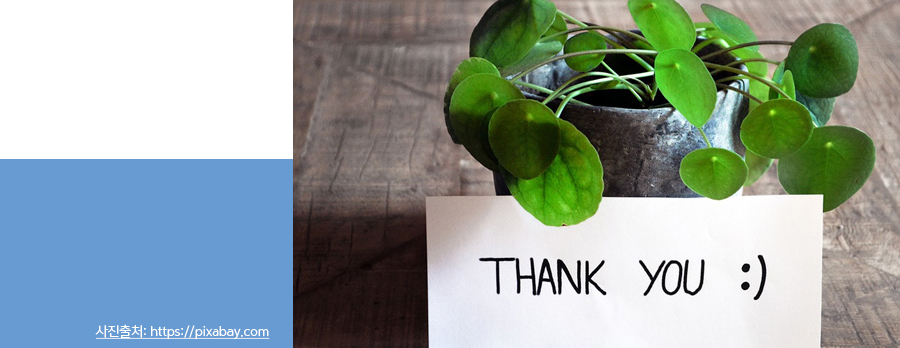
사진출처: https://pixabay.com
The Anatomy of a "Thank You” Note by Lizzie Post:
Step 1
Start with an opener or greeting: "It was so lovely to see you at Thanksgiving this year!"
Step 2
Thank them for the specific item given and tell them how you havealready used the gift, or plan to: "Thank you for the lovely bowl. It is the perfect fall color for my dining room table and I can't wait to enjoy it all season long."
Step 3
Then, a closing. It's nice to include a wish for the future but not obligatory. "I look forward to visiting in the New Year and hope that you enjoy the holidays."
감사 메모의 구조 - by Lizzie Post
1단계
여는 말이나 안부의 말로 시작하라: “올해 추수감사절에 보게 되어서 너무 기뻤어!”
2단계
선물 받은 구체적인 물건에 대해 감사를 표하고 어떻게 그것을 쓸지, 혹은 썼는지 표현하자. “귀여운 그릇을 선물해줘서 고마워. 식탁에 딱 맞는 가을의 색인 걸. 일년 내내 쓰도록 할게.”
3단계
그리고 닫는 말. 미래에 대한 바람을 넣으면 좋다. 하지만 의무적이지는 않도록. “새해에 찾아갈 수 있기를 바랄게. 연휴 잘 보내.”"
Although my grandmother passed away two decades ago, this morning I wrote her a posthumous thank-you note on the stationery she gave me after college as a personal example of these key ingredients.
할머니가 돌아가신지는 20년이 지났지만 오늘 아침, 할머니에게 졸업 선물로 받은 문구로 사후의 감사편지를 보냈다.
이러한 3가지 요소를 넣은 나의 개인적인 예시다.
사진출처: http://www.clipartkorea.co.kr
I’m not an etiquette expert. But, intuitively, my thank-you notes tend to include the ingredients that Post suggests, along with a light-hearted, playful tone. For example, I generally try to include past, present, and future references and put the specific gift (or reason for appreciation) in a personalized context.
나는 에티켓의 전문가는 아니다. 하지만 나의 감사 메모는 쾌활하고 장난기 많은 어조와 함께 직감적으로 포스트가 제안한 요소를 넣으려 한다.
예를 들자면, 나는 대개 과거, 현재, 미래를 언급하고 구체적인 선물을 (혹은 감사를 하는 이유를) 개인적인 맥락으로 표현하려고 한다.
As mentioned, I’m embarrassed to admit that I haven’t sent anyone a handwritten thank-you note in eons. In fact, I haven’t handwritten anything for a long time. (My penmanship has clearly turned to chicken scratch!) That said, the latest study by Kumar & Epley has inspired me to start sending people handwritten thank-you notes more frequently. Hopefully, learning about the prosocial benefits of sending letters of appreciation will encourage you to do the same and will help to create an upward spiral of well-being that spreads from one person to another.
앞서 말했지만, 나는 오래도록 자필 감사 메모를 아무한테도 보내지 않았고, 이것을 인정하기가 부끄럽다.
사실, 오래도록 뭔가를 자필로 써보지 않았다. (내 서체는 분명 괴발개발이 되었을 것이다!) 그렇긴 하지만, Kumar와 Epley의 최신 연구는 자필 감사 메모를 더 자주 쓰도록 나를 고무해
주었다.
이 글을 읽는 독자도 감사의 편지를 보내는 것의 친사회적 혜택에 대해 알게 됨으로써 이와 같이 편지를 직접 쓰게 되고, 그것이 사람들에게 점점 퍼져 웰빙의 상승 나선을 그리게 되기를
희망한다.
References
Amit Kumar and Nicholas Epley. “Undervaluing Gratitude: Expressers Misunderstand the Consequences of Showing Appreciation.” Psychological Science (First published online: June 27, 2018) DOI: 10.1177/0956797618772506
Amit Kumar and Nicholas Epley. “Undervaluing Gratitude: Expressers Misunderstand the Consequences of Showing Appreciation.” Psychological Science (First published online: June 27, 2018) DOI: 10.1177/0956797618772506
