급성 관동맥증후군과 심방세동이 있는 환자에서 P2Y12 inhibitor를 복용 중일 때, 항응고 치료로는 와파린 보다는 apixaban을 사용하고 항혈소판 치료로는 ASA를 추가하지 않는 것이 출혈과 입원율을 낮춘다.
배경
WOEST trial, PIONEER AF-PCI trial, RE-DUAL PCI trial 등에서 관동맥 증후군 환자에서 항응고치료에 대한 연구결과들이 보고된 바 있다. 본 연구는 최근 급성 관동맥증후군을 경험했거나 관동맥 중재술을 받은 심방세동 환자에서 아픽사반의 안정성과 효과 입증을 위해 진행되었다.
방법
본 연구는 Phase 4. Open-label, 2 x 2 factorial, 무작위 배정, international (33 countries), controlled trial이고 6 개월 추적검사를 시행하였다. 연구 등록 기준은 18 세 이상, 최근 급성 관동맥 증후군이 있거나 PCI 받고 적어도 6개월동안 P2Y12 inhibitor를 복용, 이전에 심방세동이 확인되었고 장기간 항응고치료가 필요한 경우를 모두 만족하는 경우로 하였다. 본 연구는 3개의 arm으로 구성되었고 모든 환자는 clopidogrel과 같은 P2Y12 inhibitor를 복용했다. 1번 arm은 apixaban (5 mg or 2.5 mg 2 times a day) ± aspirin, 2번 arm은 Vitamin K antagonist (VKA) (once daily) ± aspirin (81 mg once daily), 3번 arm은 aspirin placebo로 구성하였다. Primary endpoint는 아픽사반 혹은 와파린 치료 6개월간 ISTH major or CRNM bleeding의 발생율과, 아스피린 유무에 따른 6개월간 major or CRNM bleeding event 발생율이었다.
주요 결과
Primary endpoints
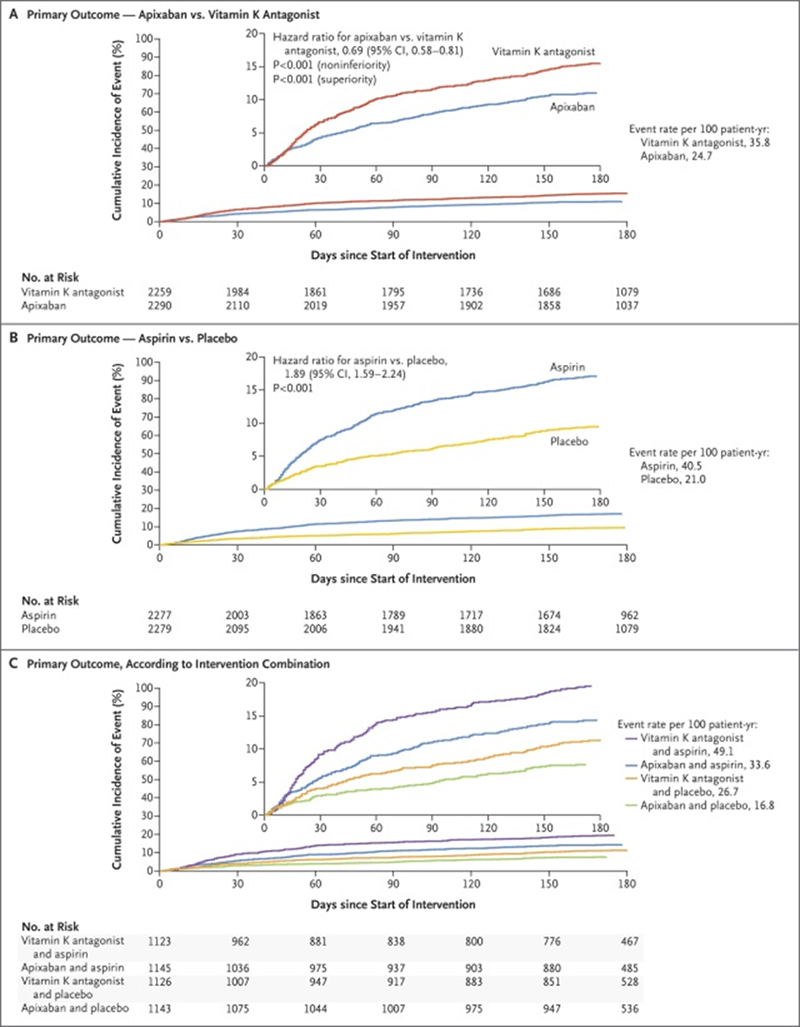
Risk of major or clinically relevant bleeding
of apixaban ± aspirin (n=2306)vs vitamin K antagonist (TTR 59%) ± aspirin (n=2307)
(all patients also on P2Y12 inhibitors such as clopidogrel).
• Major or clinically relevant bleeding :
o Apixaban 10.5%, VKA 14.7%, HR, 0.69, p<0.001 for non-inferiority and superiority
o Aspirin 16.1%, aspirin placebo 9.0%, HR, 1.89, p<0.001 for superiority
Secondary endpoints
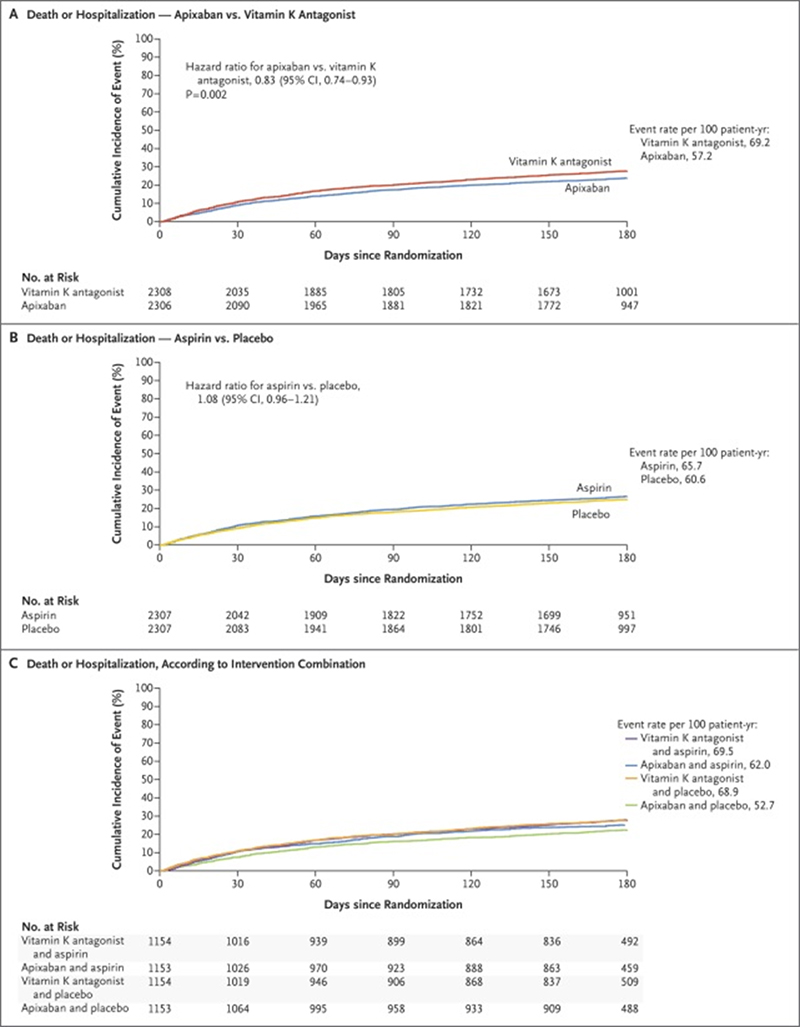
• Death or hospitalization
o Apixaban 23.5%, VKA 27.4%, HR 0.83, p=0.002 for superiority
o Aspirin 26.2%, VKA 24.7%, HR 1.08, p NS for superiority
• Death or ischemic event
o Apixaban 6.7%, VKA 7.1%, HR 0.93, p NS for superiority
o Aspirin 6.5%, VKA 7.3%, HR 0.89, P NT for superiority
- N Engl J Med 2019;Mar 17:[Epub ahead of print]
임상적 함의
급성 관동맥증후군과 심방세동이 있는 환자에서 P2Y12 inhibitor를 복용 중일 때 아픽사반이 와파린에 비해 출혈이 적고, 사망과 입원율도 낮았으나 허혈사건은 비슷했다. 아스피린이 placebo에 비해 출혈이 많지만 사망 혹은 입원, 허혈사건은 비슷했다. 기존의 일련의 연구(WOEST trial, PIONEER AF-PCI trial, RE-DUAL PCI trial)와 AUGUSTUS trial을 미루어 볼 때, 항혈소판 치료와 항응고 치료가 동시에 필요한 환자에서는 항응고 치료와 clopidogrel 단독 요법이 적절한 것으로 생각된다. AUGUSTUS 연구는 apixaban의 와파린 대비 낮은 출혈률을 보여주었다.
참고 문헌
Lopes RD, Heizer G, Aronson R, et al., on behalf of the AUGUSTUS Investigators. Antithrombotic Therapy After Acute Coronary Syndrome or PCI in Atrial Fibrillation. N Engl J Med 2019;Mar 17:[Epub ahead of print].